PART 2
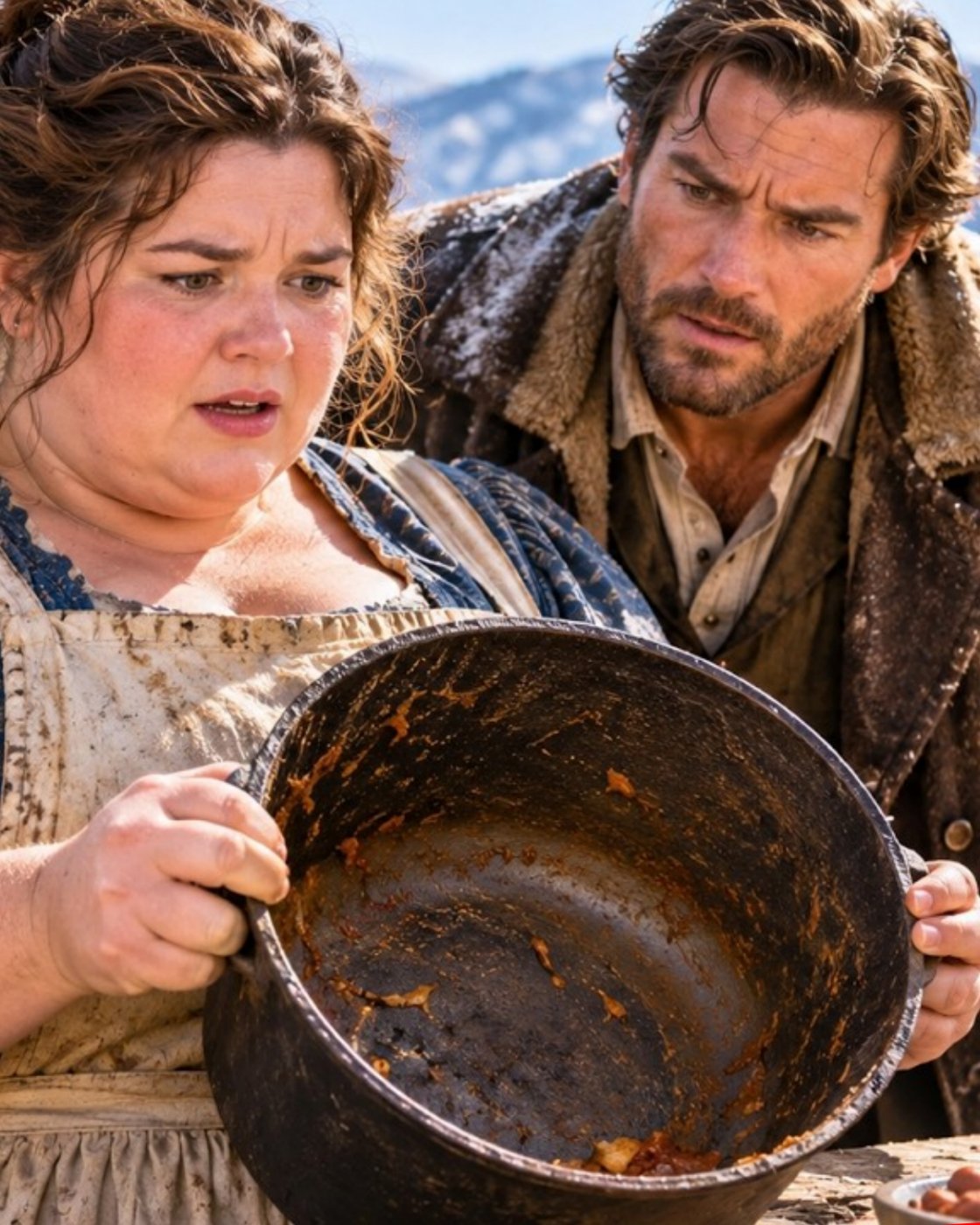
Eleanor stared at him.
“I wasn't starving myself.”
Thomas glanced at her untouched supper.
“Then why haven't you eaten?”
“Someone might need it tomorrow.”
He pulled out the chair opposite her.
“And what happens when the woman feeding forty people collapses because she won't feed herself?”
Eleanor looked away.
“I've always been the one people came to when they needed something.”
“I know.”
“And if I stop being useful…”
Her voice broke.
“I'm afraid nobody will have a reason to keep me.”
Thomas sat very still.
For four years, he'd watched Eleanor prepare meals, mend torn shirts, remember birthdays, and leave extra bread for men who had nowhere else to go.
He had never considered that she might believe her place at the ranch depended on how much she sacrificed.
“Nell,” he said softly, “you aren't here because of what you can carry in those hands.”
She looked at him.
“Then why am I here?”
He hesitated.
“Because this place hasn't felt like a home since my wife died. Not until you came.”
Eleanor's breath caught.
Thomas had been widowed for six years.
He rarely spoke of his marriage, and Eleanor had never dared ask whether he might someday love another woman.
But before she could answer, he gently pushed the soup toward her.
“Eat. Tomorrow we need your mind, not another sacrifice.”
The following morning, Eleanor called Thomas and Caleb into the kitchen.
She placed the ledger between them.
“I've been trying to solve everything alone,” she admitted. “That ends today.”
Caleb folded his arms.
“What do you propose?”
“Twenty-six of your men came here hungry. But some of them can work.”
“They're exhausted.”
“Then the exhausted ones rest. The others help clear snow, repair the barns, and carry wood.”
Thomas leaned forward.
“And the kitchen?”
“I need two helpers. Someone who can bake, someone who can wash and prepare vegetables.”
Caleb smiled faintly.
“Walter Briggs worked in a bakery before he became a cowboy.”
Eleanor raised an eyebrow.
“Then Mr. Briggs is about to become my assistant.”
For the first time in days, the three of them laughed.
By noon, the ranch was organized.
The strongest cowboys cleared snow.
Others repaired fences and hauled firewood.
Walter helped Eleanor prepare meals using carefully measured portions.
And Thomas began checking the inventory with her instead of taking control away.
But the real danger was still outside.
The feed shed had been buried beneath snow.
Without its hay, the cattle could starve.
And if the cattle died, Red Willow Ranch might not survive the winter.
“We have to reach that shed,” Thomas said.
Caleb studied the storm.
“Then we wait for the wind to ease and work in short shifts.”
For two days, the men fought the snow.
They dug a narrow passage through the lower pasture.
Built makeshift sledges.
And finally reached the buried feed shed.
When the first load of hay arrived at the barn, Thomas looked toward Eleanor standing on the porch.
She was smiling.
Not because she'd done everything herself.
But because she'd finally allowed others to help.
Still, the food shortage remained.
Caleb proposed sending four experienced riders along a sheltered trail toward the nearest settlement.
Eleanor measured their provisions carefully.
“Enough for the journey,” she said, “and extra if they're delayed. But turn back if the weather becomes dangerous.”
The riders departed at dawn.
One day passed.
Then another.
On the third morning, Eleanor was stirring a pot of beans when Ben burst through the kitchen door.
“Riders!”
She dropped the spoon.
Thomas hurried outside.
Four horses appeared beyond the pasture.
Behind them came two pack animals loaded with sacks.
Flour.
Beans.
Salted meat.
Dried vegetables.
Enough food to carry the ranch through the immediate emergency.
Caleb dismounted, exhausted but grinning.
“Found a merchant willing to extend credit until the road opens.”
Thomas exhaled.
Then he looked toward Eleanor.
“Can we feed them?”
She checked her ledger.
“Yes.”
He smiled.
“Then feed them, Nell.”
That evening, forty people gathered around the tables again.
But this time, Eleanor wasn't alone in the kitchen.
Walter carried bread.
Ben poured coffee.
Caleb helped serve the beans.
And Thomas insisted Eleanor sit down while her supper was still hot.
She protested.
“Thomas, there are still plates to—”
“Sit.”
She raised an eyebrow.
“Are you ordering me?”
“Only if asking nicely doesn't work.”
The cowboys laughed.
Eleanor sat.
Thomas placed a warm plate before her.
Then he took the chair beside her.
Several men exchanged knowing smiles.
Over the following days, the weather improved.
Caleb's crew repaired the remaining damage, contributed what money they could toward the supplies, and prepared to continue their journey.
Before leaving, Caleb approached Eleanor.
“Ma'am, when we arrived, my men thought they were going to die out there.”
She smiled gently.
“I'm glad you made it.”
“You gave us food when you barely had enough for yourselves.”
“And you helped us save the ranch.”
Caleb tipped his hat.
“Seems to me we saved each other.”
After the cowboys departed, Red Willow became quiet again.
One evening, Eleanor found Thomas standing in the kitchen doorway, holding two cups of coffee.
“Walk with me?” he asked.
They stepped onto the porch.
Snow covered the pasture in a pale blanket beneath the moonlight.
For a while, neither spoke.
Then Thomas turned toward her.
“Nell, I've been meaning to ask you something.”
She smiled nervously.
“About the food inventory?”
“No.”
“The winter supplies?”
“No.”
“Then what?”
He took a slow breath.
“When I lost my wife, I thought that part of my life was finished.”
Eleanor's smile faded.
“Thomas…”
“But every morning for four years, I've walked into that dining hall and found you there. And somewhere along the way, I started looking forward to seeing you more than anything else.”
Her eyes filled.
“I'm not the kind of woman men usually court,” she whispered.
Thomas frowned.
“What kind is that?”
She glanced down at her full figure.
“I'm thirty-six. I'm not slender. I've spent most of my life behind a stove.”
He stepped closer.
“Eleanor Carter, I've watched you work harder than any man on this ranch. I've watched you make frightened boys feel welcome and lonely men feel remembered.”
His voice softened.
“And I've watched you give away your own supper because someone else might need it.”
She looked up.
“That's not a reason to marry someone.”
“No,” he agreed. “But loving the woman who does those things might be.”
Eleanor stopped breathing for a moment.
Thomas reached into his coat.
He withdrew a small velvet box.
Inside was a simple gold ring.
“I don't want you to marry me because you need a home,” he said. “I want you to marry me because I can't imagine this place without you.”
Tears rolled down Eleanor's cheeks.
“You stubborn cowboy,” she whispered.
He smiled.
“Is that a yes?”
She laughed through her tears.
“Yes, Thomas. That's a yes.”
They married the following spring.
There was no grand celebration.
Just a little ceremony beneath the cottonwood trees, with the ranch hands dressed in their best shirts and Walter Briggs baking the wedding cake.
Eleanor wore a soft blue dress that made her feel beautiful.
And when Thomas took her hand, he whispered, “You look like the woman I've been waiting for.”
Years later, people still told the story of the winter when twenty-six starving cowboys arrived at Red Willow Ranch.
Some remembered the blizzard.
Others remembered the empty storeroom.
But Thomas always remembered something else.
The night he found Eleanor crying beside an untouched plate of supper.
Because that was the night he finally understood that the woman who had spent her life feeding everyone else deserved to be loved, cared for, and cherished herself.
And from that day forward, Eleanor Carter never had to wonder whether she belonged at his table.
There was always a chair beside Thomas.
And it was always hers.